

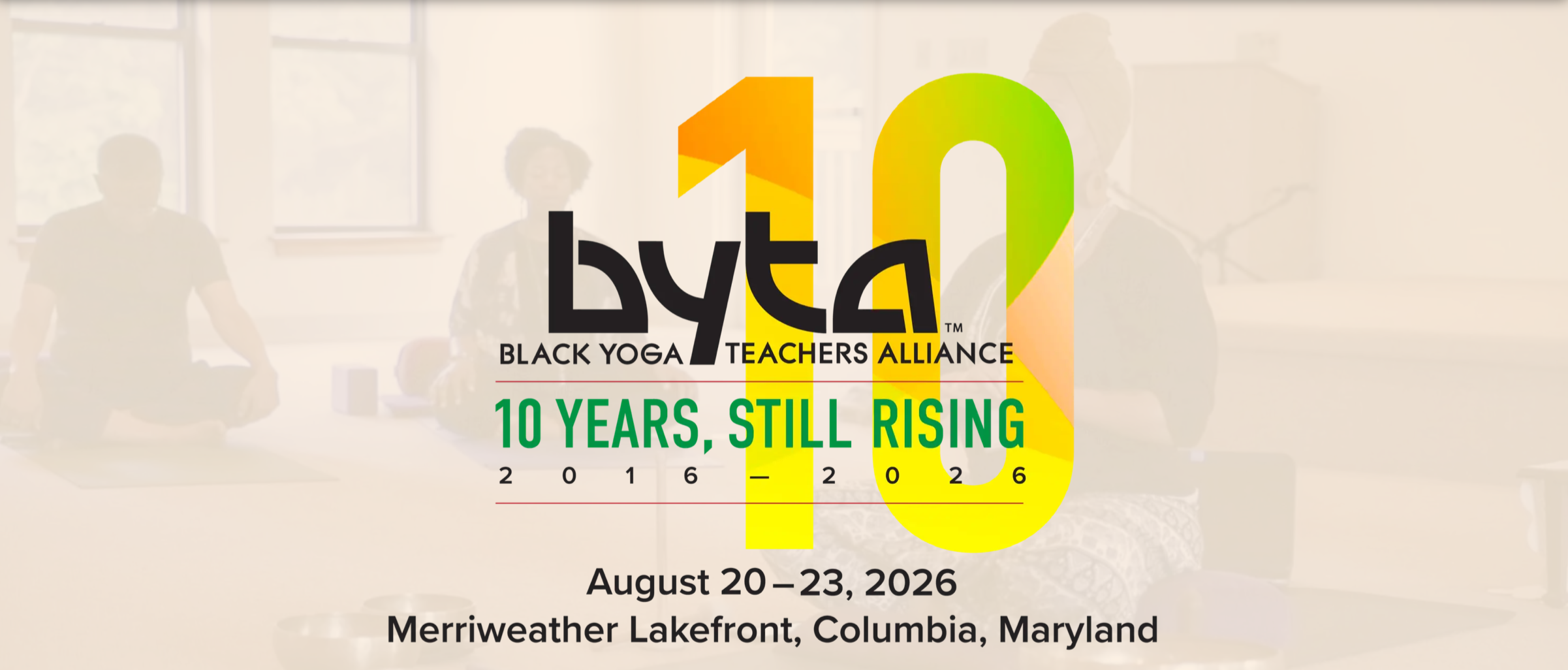
Still Rising: Reflections from the Black Yoga Teachers Alliance Conference
After gathering with Black yoga teachers, scholars, healers, and community builders at the Black Yoga Teachers Alliance Conference, I returned home with a renewed sense of clarity about the future of Noir Yoga. More than any single session, it was the people, shared wisdom, and power of community that stayed with me—a reminder that yoga is not only a personal practice, but a practice of relationship, service, connection, and collective growth.
Last weekend, I traveled to Columbia, Maryland, for the Black Yoga Teachers Alliance Conference, a gathering that brought together Black yoga teachers, practitioners, entrepreneurs, scholars, healers, and community builders. I arrived looking forward to learning from the sessions, but I left most impacted by something less tangible: the wisdom of the people in the room and the power of being in community with others who understand this work from lived experience.
Yoga often teaches us to look inward, but it also reminds us that we do not practice in isolation. Sangha, or community, is an essential part of the path. Throughout the weekend, I was reminded that there is tremendous value in gathering with people who are willing to share not only what has worked for them, but also what they have learned through change, uncertainty, failure, growth, and years of practice. Some of the most meaningful moments happened outside of formal instruction, through conversations, introductions, shared meals, and the simple experience of being surrounded by people committed to using yoga in service of others.
That sense of community feels particularly meaningful as I consider the future of Noir Yoga. From the beginning, my intention has been to create more than a studio where people come to take a class. I want Noir Yoga to be a place of belonging: a space where mindful movement can foster connection, where Black joy and healing are nurtured, and where people can experience yoga as something that extends beyond physical postures. The conference affirmed that vision while also challenging me to think more deeply about what it means to grow that work responsibly.
During The Modern Yoga Entrepreneur, Ava Taylor and Pamela Stokes Eggleston explored what it means to remain adaptable in an industry and a world that are constantly changing. One idea that stayed with me was the need to acknowledge and even grieve what no longer works before we can truly reimagine what comes next. In many ways, that reflects the yogic principle of aparigraha, or non-attachment. We can have a clear vision while remaining open to how that vision takes shape. Building Noir Yoga has required exactly that kind of flexibility: knowing when to stay the course, when to develop new skills, and when to let go of an old idea in order to make room for something better.
The session also introduced the concept of “co-opetition,” the idea that cooperation and competition do not have to be opposites. That resonated deeply with me because wellness spaces can sometimes become overly focused on differentiation, ownership, and scarcity. The truth is that there is room for many teachers, studios, and approaches to this practice. Supporting another person’s work does not diminish our own. In fact, collaboration can strengthen the ecosystem for everyone. The conference was a reminder that meaningful growth does not have to happen at the expense of connection.
Nazaahah Amin’s session, Yoga in the Village: Teaching Beyond the Studio, expanded that idea of community even further. She introduced four pillars of community-based yoga: access, relationships, adaptability, and dignity. Those words have stayed with me because they offer a useful framework for thinking about where Noir Yoga can go next. One of the questions posed during the session was deceptively simple: What does the community actually need? That question shifts the focus away from what we want to offer and toward the people we hope to serve.
For me, that is an important form of svadhyaya, or self-study. It requires us to examine our assumptions and our intentions. As Noir Yoga grows, I want us to continue finding ways to bring the practice beyond the walls of the studio and into schools, workplaces, community organizations, public spaces, and other environments where people may benefit from movement, breath, rest, and connection. Access should not simply mean inviting more people into our space; sometimes it means being willing to take the practice to them.
I also appreciated Kimberly Richardson’s session on grants, contracts, donations, partnerships, and other ways of sustaining yoga programs. It reinforced something I continue to learn as an entrepreneur: sustainability is part of service. There can be a tendency in wellness spaces to treat financial viability and mission as competing priorities, but a business or program that cannot sustain itself cannot continue serving its community. Building healthy systems, cultivating partnerships, and identifying new resources are not distractions from the work; they are part of what allows the work to endure.
Sydnea Lewis’s session on branding and messaging brought many of these themes together by asking three foundational questions: Who are you? Who are you here for? What do you want to say? They may appear to be branding questions, but they are also questions of satya, or truthfulness. In reflecting on them, I wrote a sentence that has continued to stay with me: I help cultivate community through mindful movement so that Black joy and healing can thrive.
That statement feels like a clear expression of where I want Noir Yoga to continue heading. Growth is important, but growth does not always mean becoming larger. Sometimes it means becoming clearer about who you are, more intentional about how you serve, and more aligned with the values that brought you to the work in the first place. I want Noir Yoga to continue evolving as both a strong, sustainable business and a meaningful community institution, one that creates opportunities for practice, connection, collaboration, joy, and healing.
Ultimately, the greatest gift of the BYTA Conference was the reminder that none of us has to build alone. The collective knowledge in that space was powerful because it came from people who have practiced, taught, studied, served, adapted, and persevered in different ways and across different generations. It reminded me that wisdom is not something we accumulate simply for ourselves; it is something we share, receive, and carry forward.
I returned to Brooklyn with ideas for Noir Yoga, but more importantly, with a renewed sense of purpose. I want us to continue expanding access without sacrificing dignity, building sustainably without losing the heart of the practice, collaborating instead of operating from scarcity, and remaining students even as we teach. Yoga may begin as an individual practice, but its fullest expression continually brings us back into relationship with others.
That may be the lesson I am carrying most strongly from Columbia: the practice matters, but so do the people with whom we practice it.
~Dr. Mason, Founder of Noir Yoga
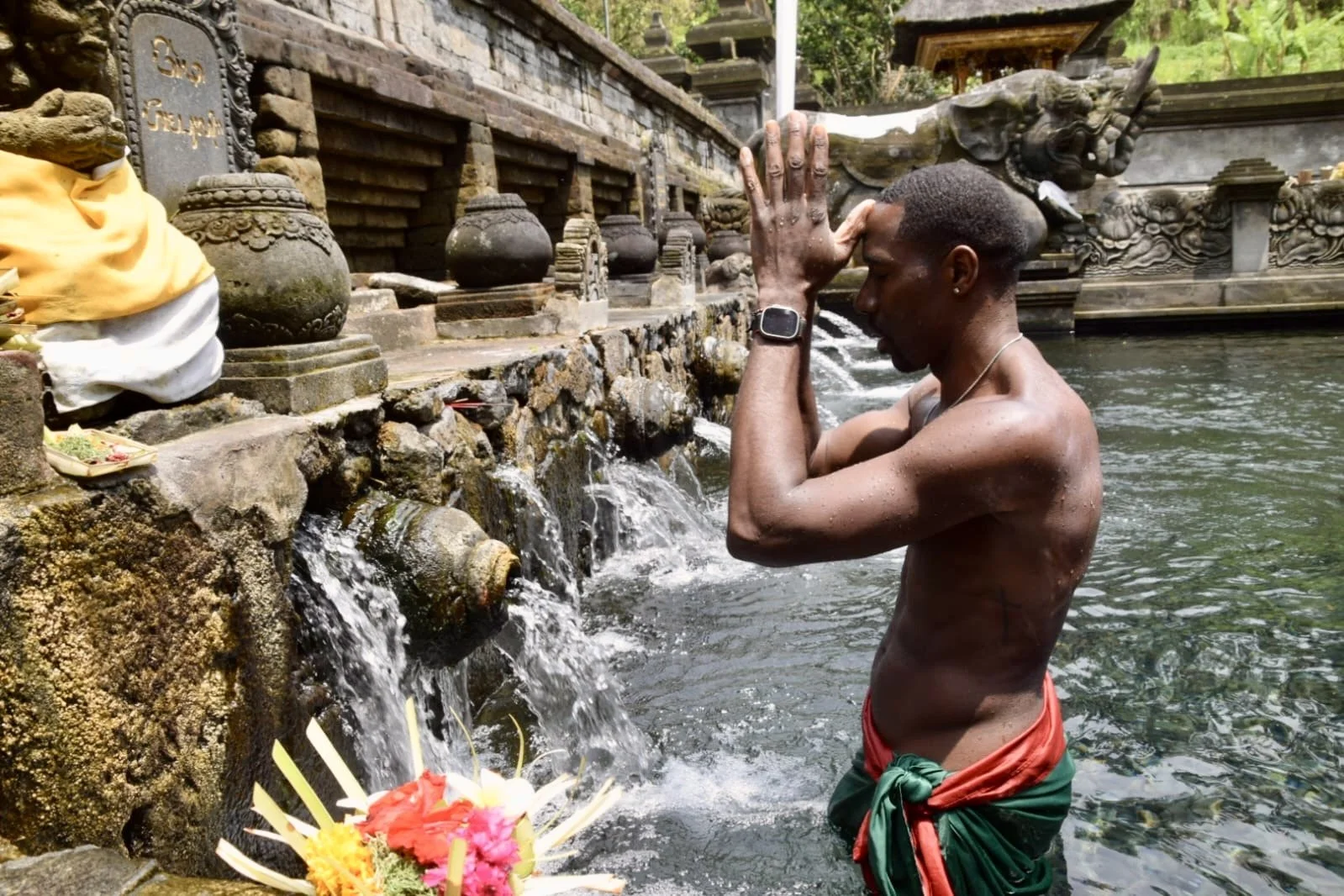
Decolonizing, Demystifying, and Deconstructing Yoga
“Decolonizing, Demystifying, and Deconstructing Yoga” explores how yoga can return to its cultural roots while becoming more accessible, inclusive, and liberatory for every body—especially Black and brown communities. At Noir Yoga, we reframe yoga beyond physical poses, honoring its lineage, dispelling myths, and rebuilding the practice through truth, cultural integrity, and collective healing. This blog offers a transformative perspective for anyone seeking a more authentic, trauma-informed, and culturally grounded approach to yoga.
Reclaiming a Practice Rooted in Freedom, Culture, and Collective Healing
Yoga is undergoing a transformation.
For decades in the West, yoga has been packaged, commercialized, and filtered through a narrow lens—often stripped of its history, its cultural context, and the very communities it was designed to liberate. What was once a holistic practice of breath, movement, spirit, and self-realization was reduced to curated poses, expensive leggings, and an expensive drop-in class promising a “good stretch.”
At Noir Yoga, we believe yoga is far more than that.
Yoga is a path.
Yoga is a story.
Yoga is liberation work.
And to honor that truth, we must decolonize, demystify, and deconstruct the practice so that it can return to its roots—and evolve into an inclusive, healing modality for every body, especially those historically excluded from wellness spaces.
1. Decolonizing Yoga: Returning the Practice to Its Lineage
To decolonize yoga is to tell the truth.
It means naming that yoga is not an “American fitness trend,” but a 5,000-year-old spiritual and philosophical system originating in South Asia. It also means acknowledging how colonization, capitalism, and Western wellness culture distorted it—turning sacred practices into commodities.
Decolonization is not an aesthetic; it’s an active process. It means:
Honoring yoga’s South Asian roots and teachers
Rejecting cultural erasure and appropriation
Creating space for the voices, bodies, and lineages historically pushed out of the studio
Teaching yoga as a philosophy, not just a physical workout
Centering healing over performance or perfection
At Noir Yoga, decolonization looks like:
welcoming Black and brown bodies with intention, teaching beyond the poses, and creating a practice culture rooted in truth, reverence, and liberation.
2. Demystifying Yoga: Making the Practice Accessible for Everyone
Yoga should not feel intimidating. It shouldn’t require “flexibility,” a certain body type, or the confidence to walk into a room where no one looks like you.
Demystifying yoga means removing the barriers—real and perceived—that keep people from showing up on the mat.
Demystification means teaching that:
Yoga is not about touching your toes; it’s about meeting yourself where you are.
Breathwork is yoga. Meditation is yoga. Rest is yoga.
You don’t need fancy clothes, a Sanskrit vocabulary, or a wellness résumé.
Yoga belongs to beginners just as much as advanced practitioners.
Every body—curvy bodies, Black bodies, aging bodies, disabled bodies, trans bodies, pregnant bodies—is a “yoga body.”
This is why Noir Yoga created Noir Beginnings, a class designed specifically for those who are new, nervous, or rediscovering their bodies. It’s also why our instructors focus on trauma-informed teaching, shape-inclusive cues, and practices that invite ease rather than pressure.
We don’t want yoga to feel mysterious. We want it to feel like home.
3. Deconstructing Yoga: Breaking Down the Myths and Rebuilding What Matters
To deconstruct yoga is to peel back the layers.
It’s asking:
What do we actually need from this practice?
And what outdated, harmful, or exclusionary ideas can we release?
Deconstructing yoga means:
Letting go of the myth that advanced poses = advanced practice
Dissolving the “guru culture” and returning agency to the student
Challenging performative spirituality
Rejecting the commercialization that limits who can access healing
Redefining what strength, discipline, and devotion look like on the mat
At Noir Yoga, our future Yoga Teacher Training (YTT) program will guide students in examining not only how they practice yoga, but why. We are rewriting the rules that Western culture imposed—reconnecting yoga to freedom, community, and collective care.
Deconstruction allows us to rebuild yoga with integrity.
Why This Matters — Especially in a Black-Owned Yoga Studio
For Black communities, healing is not a luxury; it is a necessity. Our bodies carry generational stress, ancestral wisdom, and the daily pressures of navigating systems not built for us.
Decolonizing, demystifying, and deconstructing yoga gives us permission to reclaim wellness on our terms.
It gives us space to breathe.
To soften.
To strengthen.
To remember who we are.
At Noir Yoga, this work is not theoretical—it is lived. It’s woven into every class, every playlist, every workshop, every greeting at the front desk. Our studio is a sanctuary where culture is honored, identity is celebrated, and healing is communal.
The Future: A Yoga Teacher Training Designed for Liberation
This blog post is the foundation of Noir Yoga’s upcoming Yoga Teacher Training theme: Decolonizing, Demystifying, and Deconstructing Yoga.
Our training will prepare teachers to:
Teach yoga with cultural and historical integrity
Serve diverse communities with compassion and skill
Integrate trauma-informed, inclusive, and anti-oppressive practices
Lead with authenticity, humility, and cultural awareness
Build a yoga culture where liberation is the priority—not aesthetics
This is the yoga the world needs now. This is the yoga we are committed to offering.
An Invitation
Yoga is not something we have to perfect. It is something we practice, together.
If you are seeking a space that honors your humanity, your identity, your story, and your healing—you belong here.
Welcome to Noir Yoga.
Where we breathe differently.
Where we heal loudly.
Where we practice liberation.
Asé
By Dr. Mason Mason, Founder & CEO, Noir Yoga

Reflections on the "Yoga for Black Men" Workshop
I had the privilege of facilitating Noir Yoga’s first "Yoga for Black Men" workshop, an experience that reminded me why I opened this space in the first place.
On Saturday, September 14th, I had the privilege of facilitating Noir Yoga’s first "Yoga for Black Men" workshop, an experience that reminded me why I opened this space in the first place. Over the course of two hours, we journeyed together through journaling, breathwork, meditation, yoga, mindfulness, and sound therapy. These practices came together to create a deeply intentional space for Black men to focus on healing, reflection, and self-discovery.
The energy in the room was palpable from the moment we began. There was a sense of camaraderie, even among those who had never met before. I watched as participants used journaling to release and process their thoughts—often heavy ones that rarely find space in everyday life. Breathwork allowed everyone to ground themselves in the present moment, a much-needed reset from the constant hustle that often surrounds us.
Yoga, meditation, and mindfulness were key components of our time together, offering moments of quiet strength and connection to our bodies. By the time we moved into sound therapy, I could feel that the group was fully immersed, letting go of the outside world and embracing this moment of communal healing.
As I reflect on this workshop, I am left with a full heart and a clear mind. This was exactly the kind of gathering I envisioned when I dreamed of Noir Yoga—a place for Black men to come together, heal, and grow in an environment that centers their experiences. I truly believe that spaces like this are not just important, but essential for our well-being.
Looking ahead, I’m excited to announce that I’ll be hosting these workshops quarterly, with the next one scheduled for January 2025. I hope to continue building on the energy we created and provide more opportunities for connection, healing, and transformation.
If you missed this session, I encourage you to join us next time. Together, we are cultivating something special, and I can’t wait to see what the future holds.